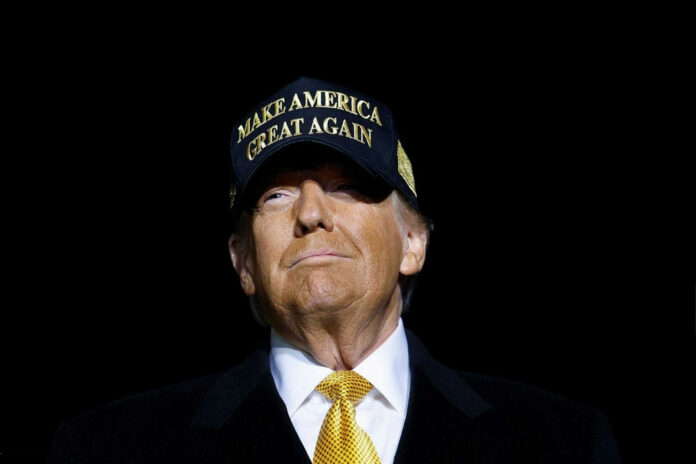
Iran’s latest threat against President Trump has put a fresh spotlight on a long-running security fight tied to the killing of Qassem Soleimani.
Quick Take
- Israel reportedly told the United States that Iran had a new plan to assassinate Trump.
- Trump said Iran wants to take him out and warned he is on a kill list.
- Reports said mourners in Iran carried banners calling for Trump’s death.
- Trump’s plane switch on the way back from Turkey was described as a security step.
Trump Says Iran Wants Him Dead
President Trump said Iran wants to assassinate him after new reporting said Israel passed along updated intelligence about a fresh Iranian plot. The reports landed as Trump was speaking publicly about the threat during his trip to Turkey. He said, “They want to take out the U.S. leader—me,” and described himself as a top target for Tehran. That blunt warning turned an already tense standoff into a direct security issue.
The reporting also tied the threat to public hostility in Iran. One account said mourners at a funeral for Supreme Leader Ayatollah Ali Khamenei carried banners calling for Trump’s death. The Wall Street Journal said Iran has publicly vowed for years to avenge the killing of Soleimani, the Islamic Revolutionary Guard Corps general killed during Trump’s first term. That history helps explain why the threat now carries such political and security weight.
Security Steps Around Trump’s Travel
Trump’s travel back from the NATO summit in Turkey drew attention because he switched planes mid-flight, a move described as an unusual security measure. The New York Times, as quoted in later reporting, said the change came at the recommendation of the United States Secret Service and was treated as a precaution. The White House did not publicly link the plane change to any one threat, but the timing made the decision hard to ignore.
Trump himself has leaned into the danger in public remarks. NBC News reported that he said he was “number one on the kill list for Iran,” and that the White House confirmed the security concern. Other reports said the United States had not publicly verified the Israeli intelligence, even though the warning increased alarm inside and outside government. That leaves one key fact clear: the threat is being treated seriously, even if some details remain undisclosed.
What the Reporting Does and Does Not Show
The strongest reporting says Israel shared updated intelligence with the United States, but it does not spell out the full plot details. No public report has named operatives, timelines, or a method. That matters because the lack of detail limits what can be confirmed in public. Still, the broader pattern is not new. Iran has long threatened revenge over Soleimani, and earlier reporting has already linked Iranian efforts to Trump assassination planning.
For readers who want the plain bottom line, this is a real national security story, not internet noise. Trump says Iran is targeting him, Israel reportedly warned Washington, and public threats from Iran have continued for years. At the same time, some reporting notes that United States officials have not publicly confirmed every part of the alleged plot. That mix of hard warning and limited public detail is exactly why the matter is still unfolding.
Sources:
facebook.com, wsj.com, youtube.com, nbcnews.com