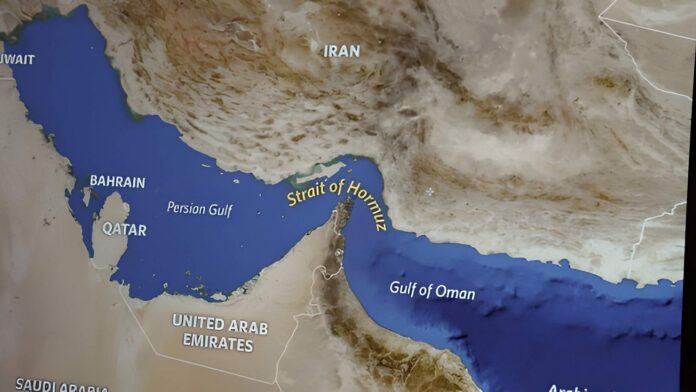
Iran has again declared the Strait of Hormuz “closed,” driving oil prices higher and testing how far America will go to keep the world’s energy lifeline open.
Story Snapshot
- Iran’s Revolutionary Guard says it has shut the Strait of Hormuz “until further notice” after hitting a commercial ship.
- The United States Central Command rejects Iran’s claim and insists traffic is still flowing through the vital waterway.
- Fresh U.S. strikes on Iranian targets have reignited fighting, and global oil prices jumped as traders fear wider disruption.
- Older Americans face rising gas and energy costs again as a hostile regime uses oil routes to pressure the free world.
Iran Claims Closure Of Vital Oil Chokepoint
Iran’s Islamic Revolutionary Guard Corps navy announced through state media that it has closed the Strait of Hormuz “until further notice,” tying any reopening to an end of American involvement in the region. Commanders said no vessels would be allowed to pass and warned ships against using what they called “unauthorized routes” through the narrow waterway. Iranian outlets framed the move as a response to alleged ceasefire violations by the United States and Israel in nearby conflicts.
The latest claim fits a pattern seen many times since early 2026, where Iran declares the strait closed, attacks or harasses shipping, and then later relaxes the threat. The Strait of Hormuz is one of the most important sea lanes on earth, carrying roughly a quarter of global oil flows to market. Iran’s leaders know that any hint of trouble there hits world energy prices fast, giving the regime leverage without always mounting a full naval blockade.
Attack On Cyprus-Flagged Ship Sparks U.S. Strikes
Iran’s announcement followed a serious strike on a commercial container ship transiting the strait, the Cyprus-flagged MV GFS Galaxy. The Revolutionary Guard claims it fired a “warning shot” after the vessel ignored orders to change course from an “unauthorized route,” and said the ship was hit and forced to stop. The United States Central Command reports the ship suffered heavy engine room damage, caught fire, and a civilian crew member went missing, with the crew ultimately abandoning the vessel in a lifeboat.
American forces answered with new waves of strikes against Iranian military sites tied to maritime attacks, including facilities used by the Revolutionary Guard navy. United States Central Command said the action was meant to hold Iranian forces accountable for attacking another commercial ship and to protect free navigation in the strait. Officials note the assault on the GFS Galaxy came after earlier attacks on several vessels, part of a broader campaign that has disrupted normal shipping since February 2026.
U.S. Says Strait Remains Open As Oil Prices Climb
While Iran talks of “complete closure,” American commanders stress that Iran does not control the Strait of Hormuz and that lawful traffic continues to move. The United States Central Command has repeatedly stated that “the Strait of Hormuz is open to all vessels seeking to lawfully transit the international waterway,” and says commercial ship traffic has increased on some recent days even amid clashes. One recent report from military authorities said 55 merchant vessels had passed through in a single day, carrying over 17 million barrels of oil.
Traders and energy analysts are watching these conflicting claims closely, and oil prices have already jumped on fear that the crisis could spread. Even talk of closure, backed by live missiles and drone strikes in the region, adds a “risk premium” to each barrel of oil, which quickly shows up at American gas pumps. For families already squeezed by years of inflation and high energy bills, each new flare-up in the Strait of Hormuz feels like a direct hit on the household budget.
Pattern Of Coercion Raises Stakes For American Policy
Historical reviews of the 2026 crisis show Iran has used repeated closure declarations, radio warnings, and targeted attacks to sharply cut traffic through the strait without keeping it fully shut at all times. Analysts say this “declare-close, then reopen” pattern is designed to scare markets and press Washington for concessions on sanctions, troop deployments, and support for Israel, while avoiding the cost of a permanent blockade. At the same time, the United States and its Gulf partners stress that navigation is still possible, to reassure allies and blunt the impact on the global economy.
For American conservatives, this fight highlights why a strong military, a clear energy strategy, and secure borders matter so much. A hostile regime thousands of miles away is again trying to use energy as a weapon, betting that nervous markets and tired Western voters will push Washington to back down. The Trump administration now faces pressure not only to keep the sea lanes open but also to shield American families from yet another round of rising fuel costs while standing firm against Iranian aggression.
Sources:
youtube.com, openthemagazine.com, politico.com, wbrz.com, rferl.org, cbc.ca, facebook.com, congress.gov, wisn.com, x.com, centcom.mil