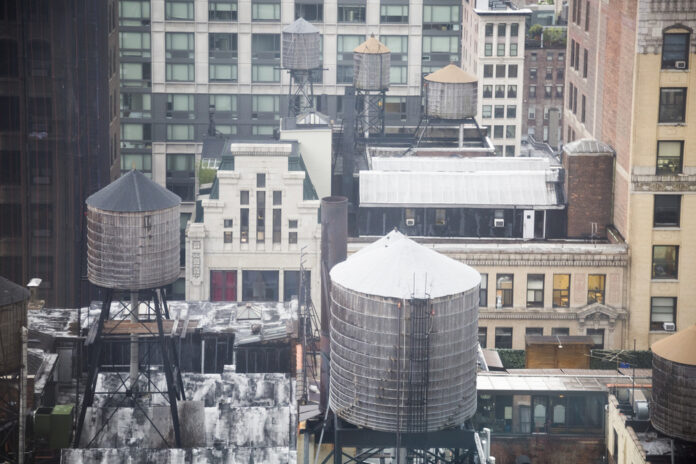
A fresh Legionnaires’ disease cluster tied to New York City cooling towers is raising new questions about whether officials are finally fixing a long-running safety problem or just repeating the same mistakes again.
Story Snapshot
- New York City Health Department reports 14 Legionnaires’ cases in a new Manhattan community cluster linked to cooling towers.
- Past Harlem outbreaks sickened more than 100 people and showed how rooftop cooling towers can quietly spread deadly bacteria.
- Whole genome sequencing has confirmed cooling towers as the source in earlier Bronx and Harlem outbreaks, but not yet in this new cluster.
- Regulators only tightened tower inspection rules after repeated failures, raising concerns about oversight and accountability.
New Manhattan Cluster Adds To New York City’s Legionnaires’ Burden
New York City Health Department officials say they are investigating a new community cluster of 14 Legionnaires’ disease cases across two Manhattan neighborhoods, with early findings pointing toward contaminated cooling towers as the likely source. Legionnaires’ disease is a serious type of pneumonia caused by Legionella bacteria growing in warm water systems like rooftop cooling towers and then spreading through mist in the air. When several people in the same area get sick at once, health teams look first at cooling towers, hot tubs, and spray fountains as common exposure points.
According to the city’s Legionnaires’ guidance, building owners must register cooling towers, test them regularly, and quickly disinfect if bacteria are found. These rules reflect hard lessons from past outbreaks where dozens of people fell ill before problems on rooftops were taken seriously. The department now treats any neighborhood cluster as an urgent sign that something in the local water systems has gone wrong, triggering sampling of all operable cooling towers in the affected zone and ordering immediate cleanup if tests come back positive.
Harlem’s Recent Outbreak Shows How Fast Things Can Escalate
The new 14-case cluster comes on the heels of a major Central Harlem outbreak in 2025 that sickened more than 100 people and killed at least five. In that outbreak, officials sampled cooling towers across five zip codes in Harlem and found Legionella bacteria in 12 towers on 10 buildings, including Harlem Hospital and a city sexual health clinic. Those towers were fully drained, cleaned, and disinfected after culture tests showed live bacteria, and the mayor publicly released the list of connected buildings only after remediation was underway.
City health officials later said they had definitively linked that Harlem outbreak to cooling towers, not to the drinking water or household plumbing, underscoring how rooftop systems can become hidden hazards for entire neighborhoods. This followed an earlier South Bronx outbreak in 2015, where 138 people were infected and 16 died before investigators used whole genome sequencing to trace the source to a single hotel cooling tower. That case pushed New York City to become the first big jurisdiction in the country to regulate cooling towers with registration, routine testing, and strict maintenance plans.
Powerful Lab Tools Confirmed Past Sources, But Data Lag In New Cluster
In the 2015 South Bronx outbreak, scientists compared genetic fingerprints from patient samples and cooling tower water using whole genome sequencing. They found that the Legionella strain in the hotel tower was essentially identical to the strain in dozens of sick patients, closing the loop between rooftop equipment and human illness. Similar advanced testing was later used in a detailed public health report on the Harlem outbreak, where isolates from two separate cooling tower systems were highly related to clinical samples from early patients.
Those previous investigations show the gold standard for proving a source: match the bacteria in the environment to the bacteria in people. In the current 14-case Manhattan cluster, officials have publicly pointed to cooling towers as the likely source and begun remediation, but they have not yet released whole genome sequencing results tying specific buildings to patients. That gap leaves questions for residents who want clear answers about which towers failed and how long the city will keep leaning on assumptions before full lab confirmation is available.
Regulatory Struggles And Detection Bias Fuel Concerns About Oversight
Experience from 2006 to 2015 shows that New York City has faced six community-associated Legionnaires’ outbreaks, and only half were definitively linked to cooling towers by molecular comparison; the sources for the other three remained undetermined. One technical review of New York’s Legionella rules warns that many outbreaks were “initially blamed on cooling towers” because they were the easiest systems to test, creating a detection bias that may overlook other water sources. That concern matters now, as the new cluster is once again framed almost entirely through the lens of cooling tower failure.
In response to repeated problems, the city has recently tightened its rules, requiring building owners to test cooling tower water every 31 days instead of every 90 to catch Legionella growth sooner. Health officials also highlight that many Harlem residents are older adults or people with chronic lung disease, making them more likely to get very sick when exposed. Yet each new outbreak shows that paperwork alone is not enough. Real safety depends on honest reporting, timely lab data, and regulators who put public health above convenience for large property owners and city agencies.
Sources:
nypost.com, abc7ny.com, pmc.ncbi.nlm.nih.gov, cidrap.umn.edu, nyc.gov, healthbeat.org