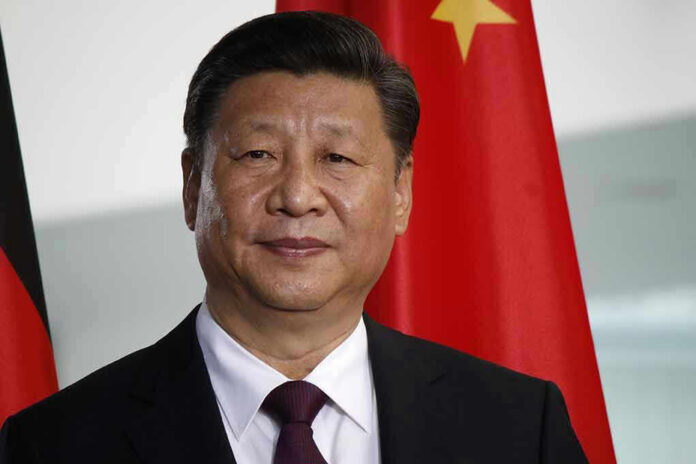
China has rejected Donald Trump’s latest claims of U.S. election meddling as “pure fabrications,” even as the White House released declassified documents tied to the dispute.
Story Snapshot
- Trump said China obtained large amounts of U.S. voter data and hid the evidence.
- China denied the charge and said it has never interfered in U.S. elections.
- Published reporting says the documents do not show a single vote was changed.
- Earlier intelligence findings said China did not try to alter the 2020 election outcome.
Trump’s Claims and the Released Documents
Trump used a primetime White House address to argue that China gained access to millions of U.S. voter records and that federal officials hid the scope of the problem. Reporting on the declassified material says the papers include claims about voter data, but they do not show vote flipping or proof that the 2020 result changed. The New York Times said the documents are heavily redacted, which makes outside review harder.
Trump also said the data included names, addresses, phone numbers, and party preferences. The Daily Signal reported that the administration tied the claims to a December 2023 Justice Department and Department of Homeland Security report, which said Chinese cyber actors collected publicly available voter information during the 2022 election cycle. Just the News separately reported that the Department of Homeland Security warned compromised voter data could be used to request absentee ballots, change voter details, or remove registrants.
China’s Rejection and the Pushback
China’s Foreign Ministry rejected the accusations on Friday and called them false. Chinese officials said the United States was making groundless claims and insisted that Beijing does not interfere in other countries’ elections. Other reports quoted Chinese spokesperson Lin Jian saying the charges were “entirely fabricated” and a “malicious smear,” language that matched the sharp tone from Beijing across multiple outlets.
The dispute fits a familiar pattern in U.S. politics. Foreign actors have tried to influence American elections through cyber operations and online messaging, but published intelligence reviews have drawn a clear line between influence and actual election interference. That distinction matters because voter data exposure is not the same thing as changing votes, breaking ballot systems, or altering official results.
What the Intelligence Record Says
That line is also where Trump’s claims run into the record from earlier intelligence reviews. A 2021 assessment said U.S. agencies had no evidence that any foreign actor changed votes, blocked voting, or disrupted the tallying of results. The assessment also found no evidence that China tried to alter the technical side of the 2020 election, even though it had gathered information and sought influence in other ways.
Would China retaliate over the new US election documents?
Trump’s release of intel showing China accessed American voter registration data in 2020 has Beijing on the defensive.
China’s likely response: Strong public denial and accusations of “smearing” or “Cold War mentality.”…
— The Mavion Corporation (@mavionx) July 17, 2026
Published reporting has also noted that many voter files are already public or available for purchase in some states. That means possession of voter data can raise serious security questions without proving election sabotage. Reuters-style summaries and fact checks in the reporting package say the core unresolved question is not whether data was obtained, but what was done with it after access was gained.
Sources:
insiderpaper.com, dw.com, nytimes.com, timesnownews.com, justthenews.com, facebook.com, instagram.com, abcnews.com, voanews.com, en.wikipedia.org