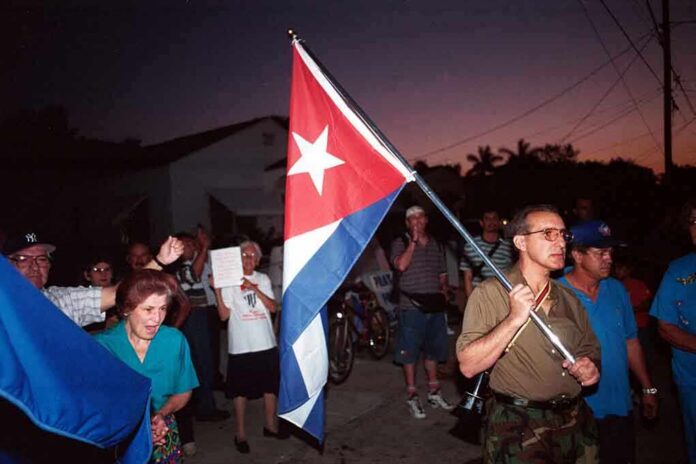
A newly released State Department report says Cuba’s communist regime spent nearly seven decades planting spies and stoking left-wing chaos inside America’s own government.
Story Snapshot
- A 100-page State Department report titled “Cuba: The Capital of 21st Century Communism” accuses Havana of a subversion campaign dating back almost 70 years.
- The report claims Cuban intelligence reached the top levels of the State Department, the National Security Council, and the Pentagon.
- Officials point to convicted spies like Ana Belén Montes and former Ambassador Victor Manuel Rocha as proof the threat is real, not theoretical.
- The document also links Cuba to activist groups, universities, and today’s far-left unrest, though some ties are looser than others.
- Critics call the report politicized, but it does not deny the country’s long, documented history of running spies inside America.
State Department Details Decades of Cuban Subversion
The State Department released its report on July 20, 2026, laying out what it calls a sustained, decades-long campaign by Cuba to undermine the United States. The document states, “For nearly seven decades, the Cuban regime has waged a sustained campaign of subversion against the United States.” That is not a fringe claim. It is the official position of the U.S. government.
The report goes further than past warnings by naming specific institutions it says Cuban intelligence managed to penetrate. It alleges Cuban spies infiltrated “the top levels of the State Department, the National Security Council, and the Pentagon.” For a regime that Americans often dismiss as a broke island with blackouts and gas lines, that is a stunning claim about reach inside the world’s most powerful government.
Real Spies Give the Report Teeth
Skeptics might wave this off as Cold War nostalgia. But the report leans on cases that are not in dispute. It cites former Ambassador Victor Manuel Rocha, Defense Intelligence Agency analyst Ana Belén Montes, and former State Department analyst Walter Kendall Myers as Cuban moles caught red-handed working inside the U.S. government. These are not theories. These are convicted spies who spent years feeding Havana secrets from inside our own agencies.
A State Department spokesperson reinforced the report’s central warning, saying it shows “decades-long influence and espionage” by the Cuban regime and connecting it to what the official called “the surge of far-left extremism and terrorism in the United States today.” That is a direct link between a hostile communist government and the unrest many Americans have watched play out in their own cities.
Campuses and Activist Groups Named as Targets
The report does not stop at government buildings. It claims Cuba “cultivated American activists,” built ties with universities and advocacy groups, and made infiltrating college campuses a top priority. For parents who have watched radical ideology spread through American classrooms for years, this section of the report will land as confirmation of what many already suspected about outside influence on campus unrest.
Even critics of the report admit some of the underlying history is real. One outlet noted the espionage angle “has long been known” and that portions of the document “contained little new information.” That is worth remembering. A report built on decades of confirmed spying does not need brand-new bombshells to matter. It needs Americans to take seriously a threat that never actually went away.
Fair Questions Remain About the Weakest Links
Not every claim in the report carries the same weight. The State Department reportedly conceded that the Democratic Socialists of America was not directly shaped by Cuban government control, narrowing one of the document’s biggest allegations. Some ties to activists appear to rest on solidarity events or support for fugitive Assata Shakur rather than hard proof of Cuban tasking. Those distinctions matter, and Congress should press for the underlying evidence behind every name listed.
Cuba spent decades waging a covert campaign to infiltrate the United States through espionage and ideological influence, according to a new State Department report that calls Havana the "capital of 21st century communism."
INFILTRATION FROM WITHIN! pic.twitter.com/C3d0Nsikbk
— AXEL VASA (@Football7222) July 22, 2026
Even so, the weaker claims do not erase the stronger ones. A government report built on convicted spies inside the Pentagon and State Department is not something conservatives should shrug off as partisan noise. The proper response is not to dismiss the whole document because some threads are thinner. It is to demand the full evidence, declassify what can be declassified, and hold hearings so Americans can judge the strongest claims for themselves.
Sources:
military.com, theguardian.com, notthebee.com, theepochtimes.com, ibtimes.co.uk