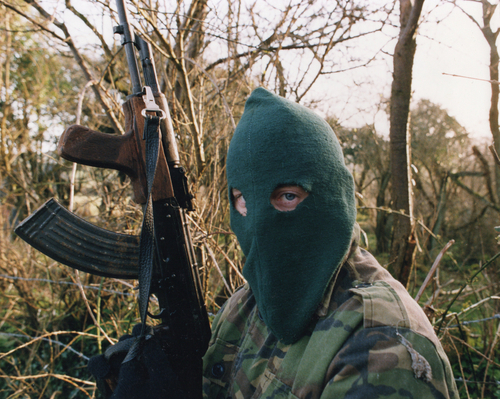
A car bomb targeting police in Northern Ireland reveals alarming connections between Irish militants and a global network of America’s most dangerous adversaries, including Iran and Hezbollah.
Belfast Attack Targets Police with External Support
The New IRA detonated a car bomb outside a Police Service of Northern Ireland station in Dunmurry on Tuesday, with the group’s leadership claiming the attack intended to kill officers leaving the facility. Police arrested a 66-year-old man under terrorism laws the same day, while the militant group issued menacing threats that anyone cooperating with authorities would be severely dealt with. The bombing followed a similar attempted car bomb attack on another Belfast-area police station just weeks earlier, establishing a pattern of escalating violence. Security forces increased patrols at stations and officer residences in response to credible threats targeting police at their homes.
New IRA bombing fuels fears of global militant network tied to Iran, Hezbollah https://t.co/JZssfuB6ua pic.twitter.com/9PiO8xVCJE
— New York Post (@nypost) April 29, 2026
Iran and Hezbollah Connections Raise National Security Alarms
The Times reported in 2020 that MI5 informant information confirmed alleged connections between the New IRA, Lebanon-based Hezbollah, and Iran’s Islamic Revolutionary Guard Corps. That same year, individuals linked to the dissident republican group signed a book of condolences following the U.S. drone strike assassination of Iranian General Qassem Soleimani in Baghdad, raising intelligence community concerns about weapons and funding from hostile state actors. These connections represent a dramatic departure from traditional Irish republican movements that operated without external state sponsorship. The convergence of a hard-left Irish republican faction with a Lebanese Shia militia would have seemed implausible a decade ago, but now fits within a documented pattern of coordination.
Former Defense Department intelligence officer Andrew Badger characterizes the New IRA-Hezbollah link as evidence of the operationalization of what experts call the “axis of resistance,” which includes Russia, Iran, China, North Korea, and expanding non-state actors operating as a working logistical and tradecraft network across the globe. The real challenge for local Irish police and security services is that these groups now compound each other’s learning, with battle-tested tactics from one theater reaching dissident cells in another within months. Western counter-terror structures simply are not wired to track this kind of rapid cross-pollination of operational techniques, creating dangerous blind spots for American allies.
Hybrid Warfare Model Threatens Western Security
Badger describes the current environment as the maturing of a hybrid warfare model pioneered and led by Russia and Iran, in which adversaries of the Western-led order increasingly share tactics, techniques, and procedures across geographies and ideologies. The playbook of these actors includes proxies, dual-use logistics, weapons-and-finance pipelines, and exploitation of grievance movements in target countries, and these methods appear to be converging into a coordinated strategy. This represents a significant evolution from traditional state-sponsored terrorism toward decentralized networks that operate through shared knowledge rather than centralized command, making them exceptionally difficult to disrupt using conventional counter-terrorism approaches.
The operational pipeline now includes Russian sabotage cells using local criminal proxies throughout Europe and Iranian-directed assassination plots on United Kingdom and United States soil, demonstrating the global reach of this network. The New IRA’s rejection of the 1998 Good Friday Agreement and pursuit of armed struggle to end British rule in Northern Ireland makes the group a willing participant in this broader campaign against Western interests. If violence continues to escalate, the Good Friday Agreement framework that brought decades of peace could face serious destabilization, with civilians and security forces bearing the consequences of externally supported militant operations on European soil.
New IRA bombing fuels fears of global militant network tied to Iran, Hezbollah https://t.co/JZssfuB6ua pic.twitter.com/9PiO8xVCJE
— New York Post (@nypost) April 29, 2026
Police officers and their families now face direct threats from a militant organization with access to sophisticated explosives and operational training from battle-hardened foreign groups. The bombing demonstrates that American adversaries are successfully exporting their capabilities to willing proxies in allied nations, creating new security challenges that transcend traditional geographic boundaries. Intelligence agencies must adapt to track the rapid sharing of tactics between groups that previously operated in isolation, or risk more attacks that exploit the seams in Western counter-terrorism cooperation.
Sources:
New IRA bombing fuels fears of global militant network tied to Iran, Hezbollah – Fox News