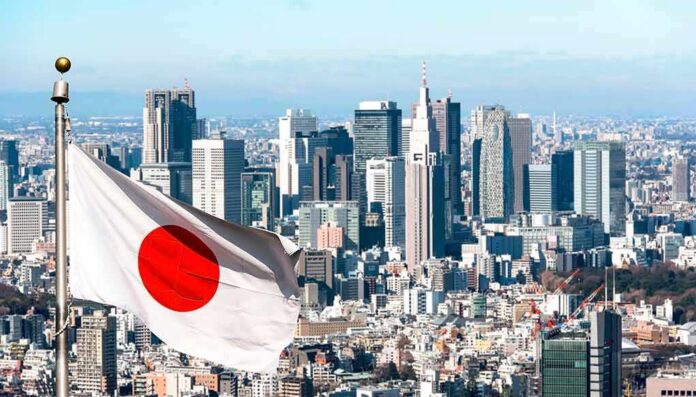
Japan just proved it can pull rare-earth-rich mud from 6,000 meters under the Pacific, quietly opening a new front in the global fight over who controls the metals behind modern technology and military power.
Story Snapshot
- Japan successfully lifted rare-earth mud from about 6 kilometers underwater near Minamitorishima Island.
- The mission is billed as the world’s first deep-sea rare earth mining test at this extreme depth.
- Tokyo’s goal is to cut dependence on China’s chokehold on critical minerals supply.
- Key questions remain about cost, environmental impact, and whether this can beat China on price.
Japan’s Deep-Sea Test: What Actually Happened
Japanese officials say a government-backed research vessel, Chikyu, has successfully brought up mud that contains rare earth elements from nearly 6,000 meters under the ocean, in waters around the remote Minamitorishima Island. The Japan Agency for Marine-Earth Science and Technology carried out the test under the Cabinet Office’s Strategic Innovation Promotion Program, making this a central piece of Japan’s economic security policy. The mission was conducted inside Japan’s exclusive economic zone, not on the high seas, which gives Tokyo clear control over any future mining rights.
The government describes this as the world’s first attempt to tap deep-sea rare earths at such an extreme depth, using technology adapted from oil and natural gas extraction. Earlier tests in 2022 only reached about 2,400 meters, so the 2026 operation more than doubled the working depth and proved the system could survive crushing water pressure while lifting sediment continuously. Japanese media reports say the first successful recovery of rare-earth-bearing mud came in the early hours of February 1, after several days of equipment setup and trial runs.
Why This Matters for China — and for America
Japan is not doing this as a science project; it is trying to break free from China’s grip on rare earth supplies that feed electronics, batteries, sensors, missiles, and other advanced gear. Chinese export curbs and price games have burned Japan before, and they also threaten American industry and our military supply chains. Tokyo’s deep-sea push is part of a broader move among allies to diversify away from China, so one country cannot weaponize minerals against the rest of the free world.
The test near Minamitorishima is being sold as a strategic milestone, not yet a full business. Japan’s Cabinet Office and Ministry of Economy, Trade and Industry have tied the project to national security and economic resilience, stressing that domestic rare earth supply would make the country less vulnerable to Chinese pressure. For the United States, this matters because Japan is a treaty ally and a major tech partner; if Tokyo can field a stable rare earth stream, it could support American factories and defense programs that President Trump wants firmly out of Beijing’s reach.
From Mud to Market: The Hard Part Starts Now
Japan’s leaders are clear on one key point: lifting mud is only the first step, and industrial production is not guaranteed. The government says commercialization must wait until engineers prove the entire chain, from seabed mining through separation and refining, and then show the numbers make sense. Current plans call for a demonstration trial that could excavate about 350 tons of rare earth mud per day starting in 2027, with a full cost study and logistics review to follow.
Analysts warn that even if the process works technically, it may not beat China’s low-cost mines and refineries. One detailed review notes that deep-sea rare earth material is unlikely to compete with Chinese supply on price in the near term, especially once you count ship operations, processing plants, and environmental safeguards. Japan is targeting possible commercial output around 2028 at the earliest, but the project still needs proof of refining efficiency, product purity, and real-world unit costs before investors and policymakers can treat it as a reliable supply source.
Environmental Fights and Information Gaps
The deep-sea test is already raising alarms among environmental groups that fear damage to seafloor life and wide sediment plumes. Reports say Japan is monitoring impacts both onboard and at the seabed, and that any move to full-scale mining will hinge on these findings. Long-term deep-sea disturbance could become a political weapon for global activists and rival nations, even if the technical side works, and could slow or limit permits for larger operations.
Another concern is that most information so far comes from the same institutions pushing the project: the Cabinet Office, the Ministry of Economy, Trade and Industry, and the marine research agency. Basic facts like total reserves and the exact investment amount have not been made public, which leaves outsiders guessing about how large and economic this resource really is. Media coverage has focused heavily on the “world-first” angle and the anti-China message, while hard data on costs, throughput, and environmental tradeoffs is still thin.
What Conservative Americans Should Watch Next
For readers in the United States, this story is a warning and an opportunity. It shows that allies like Japan are taking bold steps to secure critical minerals, while many in Washington still cling to green mandates and globalist fantasies that leave America exposed. If Tokyo can make deep-sea mining workable, it will strengthen the free world’s supply chain and reduce the leverage of a communist regime that has already used rare earths as a weapon.
President Trump’s team now has a chance to lock in serious agreements with Japan and other partners so U.S. factories, energy projects, and defense systems do not depend on Chinese goodwill. At the same time, Americans should insist on transparency and real economics from any deep-sea mining push, foreign or domestic. The goal is clear: secure the minerals our technology, jobs, and national defense need, while stopping radical environmental politics and Chinese influence from choking off our future.
Sources:
insiderpaper.com, oceanographicmagazine.com, energyindustryreview.com, straitstimes.com, meti.go.jp, www3.nhk.or.jp, mining.com, nippon.com, gcaptain.com, youtube.com, facebook.com, news.metal.com, linkedin.com, japantimes.co.jp