As Iran drags its feet on nuclear inspections after the war, the man in charge of watching their program is warning that only “very strong” verification will keep the regime from slipping toward the bomb.
Story Snapshot
- United Nations nuclear chief Rafael Grossi says new Iran deal requires tough, on‑the‑ground verification.
- Tehran still blocks access to key bombed enrichment sites, leaving a dangerous gap in what inspectors can see.
- Past deals and weak timelines let Iran play for time while keeping its nuclear options alive.
- Trump insists no U.S. money or sanctions relief should move without real inspections that protect American and Israeli security.
Grossi Says Deal Demands Real Inspections, Not “Illusion of an Agreement”
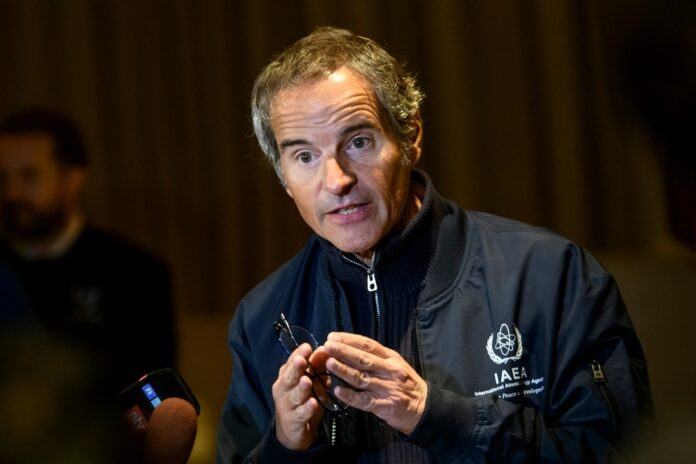
International Atomic Energy Agency Director General Rafael Grossi is making it clear that talk is not enough when it comes to Iran’s nuclear promises. In a press conference from Japan, he stressed that the new memorandum of understanding signed by the U.S. and Iranian presidents “explicitly” puts all nuclear activities involving nuclear material in Iran under his agency’s supervision, which by definition means inspections on the ground must take place, not just paperwork and statements from Tehran.[2]
Grossi explained that the document leaves “no room for ambiguity” about the role of the International Atomic Energy Agency. He said inspectors will have to visit uranium enrichment facilities and check stockpiles if the deal is to be real, warning that without his agency physically present “you will not have an agreement, you will have an illusion of an agreement.”[2] For Americans who remember how past deals let Iran stall while it kept sensitive work alive, his words ring like a warning siren.
Iran Blocks Access While Claiming It Never Agreed to Tough Checks
Iran’s leaders are telling a very different story, and that should concern every reader who cares about U.S. security and the safety of our ally Israel. After the war and U.S.-Israeli strikes on Iranian nuclear sites, Tehran barred inspectors from those damaged facilities, even as it allowed only limited visits to safer locations like the Bushehr power plant.[6] That means the International Atomic Energy Agency cannot fully verify where Iran’s enriched uranium is or whether centrifuges were quietly repaired or moved elsewhere.[2]
The regime’s foreign ministry spokesman has flatly said Iran does not intend to let inspectors into the bombed sites and claims there was no procedure in place for inspections there, contradicting U.S. statements that Iran agreed to re‑invite inspectors.[9] This is a familiar pattern: Iran signals cooperation in diplomatic rooms, then walks it back at home where hardliners demand secrecy and “resistance.” Each delay chips away at international knowledge of Iran’s nuclear materials; the International Atomic Energy Agency has already admitted in past reports that it lost “continuity of knowledge” over key parts of Iran’s program when access was cut off.[6]
History Shows Why “Very Strong” Verification Matters for America
For decades, every serious agreement about nuclear weapons has depended on one hard rule: trust nothing, verify everything. Under the old Iran nuclear deal known as the Joint Comprehensive Plan of Action, inspectors logged thousands of calendar days a year inside Iranian sites and used cameras, seals, and sensors to track nuclear material.[12] Even then, critics warned that Tehran could delay access to suspicious locations for weeks and hide work at undeclared facilities that were harder to find or monitor.[10]
After the previous deal began to unravel and finally expired in 2025, Iran ramped up enrichment far beyond civilian levels and then stopped many extra monitoring steps.[13] At one point, after war and airstrikes, Iran’s refusal to grant full access led the International Atomic Energy Agency’s own board to declare that it had lost its clear picture of the country’s nuclear stockpiles.[6] That is the backdrop for Grossi’s new call for “very strong” verification: without tight timelines, full facility access, and the ability to inspect any suspicious site, Iran can once again run out the clock while pushing closer to weapons capability.
What This Standoff Means for Trump’s America‑First Security Strategy
President Trump has repeatedly argued that any deal with Iran must deliver concrete security gains for the United States, not just headlines. In public remarks, he and his team have said there would be “no further negotiations” and no release of frozen funds without Iran agreeing to the highest level of nuclear inspections “long into the future.”[9] That stance lines up with Grossi’s warning that the International Atomic Energy Agency’s role is “not optional” in any meaningful settlement with Tehran.[2]
🟢 $QQQ $716.38 (+0.81%) (close)
The UN's nuclear watchdog says it has secured access to Iran's nuclear sites following an interim peace deal, with the IAEA chief saying inspectors hope to visit soon. This is a notable de-escalation signal for energy markets, though WTI crude is…— Deep Value (@_deepvalue_) June 26, 2026
For conservative readers, the stakes are simple but serious. A weak inspections regime risks a nuclear‑armed terror sponsor that threatens U.S. troops, allies like Israel, and the global oil market that underpins our economy. Strong verification, by contrast, backs up Trump’s maximum pressure legacy with hard facts on the ground: inspectors at enrichment plants, eyes on stockpiles, and fast reporting if Iran cheats. The current fight over access to bombed sites is the first big test of whether this new framework will truly keep America safe.
Sources:
[2] Web – The IAEA and Iran reached an agreement on inspections
[6] Web – IAEA Director General Rafael Grossi says inspections of Iran’s …
[9] Web – IAEA and Iran: Chronology of Key Events
[10] Web – Iran has agreed to highest level nuclear inspections long – Ynet News
[12] YouTube – Is The U.S.-Iran Breakthrough Unravelling? | N18G | 4K